I’ve gotten into tarot cards lately. I like collecting decks of cards with beautiful, miniature works of art on them, mainly. And I’ve always been interested in how various people groups ascribed meaning to their symbols and words. Even if I don’t believe they can truly forsee the future, my decks are fun to look at and present a new way of categorizing the world.
I’ve also been replaying through Fire Emblem: Three Houses. I’m going to admit, I still haven’t brought myself to doing the Crimson Flower route, as my love for Claude and Dimitri is as endless as it is pathetic, but going back through Verdant Winds as the professor of the Golden Deer has gotten me thinking.
About Crests. Obviously.
So I looked up an image of all the crests at once in order to study their shapes and ponder any conclusions, and I came across something very interesting:
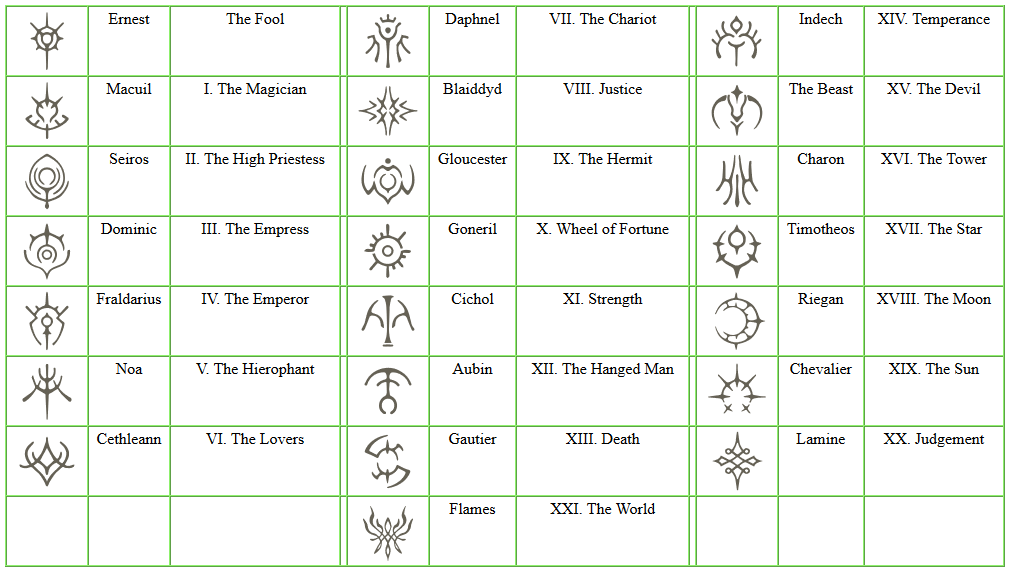
That’s right. Every Crest in the game fits neatly into the main Arcana of the standard tarot. This may not be news to many hardcore fans, but it sure did surprise me.
So here I am, a handful of goofy esoteric cards on one side, and a pile of Crests in the other.
I’m sure you can see where this is going.
For now, I will only choose the Crest I feel like talking about, but I may revisit this later.
The Crest of Flames: The World
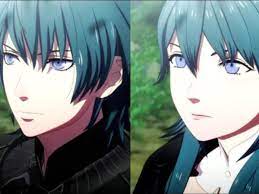
I mean, obviously this is the one I picked. This is the big one. Bourne by Byleth, the player character and reincarnated avatar of the progenitor god Sothis, the Crest of Flames is symbolized by the card The World. If there’s one thing every booklet and pseudo-goth college student will tell you, it’s that The World represents the renewal of a cycle. It’s the eye of the hurricaine, or the sharp intake of breath before the first note of an opera, the tingling drop of barometric pressure before a violent rainstorm.
“But I am also known as… The Beginning.”
Where The World occupies the space after an end, so too does it herald a beginning. No matter the route, Byleth is the driving force behind the violent, drastic change that affects the entire continent of Fodlan. Even in the game’s Academy Phase, it is obvious that the world (forgive my pun) revolves around this allegedly-young-but-obviously-something-else-is-going-on professor. And in the War Phase those changes are even more prominent.
However, the strongest point to Byleth and their Crest embodying The World is in their countenance.
Byleth is frequently described as blank, unmoving, and even reflective, as many characters (particularly Dorothea) note uncomfortably that the Professor’s gaze “sees right through” them. The Professor is both a mirror and a window. Through them, one is able to see not only what exists behind them, but also gaze through into a way forward. In this way, Byleth is not easily identified as one of the other bombastic cards of the tarot, such as The Tower or Judgement (although they do carry aspects of each card), but rather perfectly embodies the only card that remains placid even as the change of the universe swirls around them — The World.
Byleth is molded by the world around them, but at the same time changes the world to their will. They keep an emotionless expression, but is fully and completely devoted to their friends and family. They stumble into circumstances without clear goals, but through their own inner strength and determination, rise to the greatest heights.
The Crest of Flames created the world, governs the world, loves the world, and is The World.
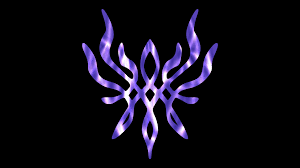
Even the shape of the Crest itself is reminiscent of the original World card.
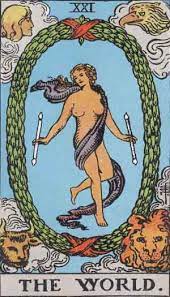
While simultaneously invoking the image of flames, Byleth’s Crest also has similar markings to that of a person suspended in the air, hair and robes flowing freely around them, grasping in both hands twin batons or staves. A stretch? Maybe. But with this sort of attention to detail in the other aspects of the Crest of Flames, I like to think the central humanoid appearance was intentional.
Every card in the tarot is equally important in their representations. Just as every unit in the game has their own preferences, abilities, and tactical niche, so too do the Cards, and so too do the Crests.
-Mono

 Learn the Lore!!